

Mallorcan sea salt vs refined salt: 5 key differences
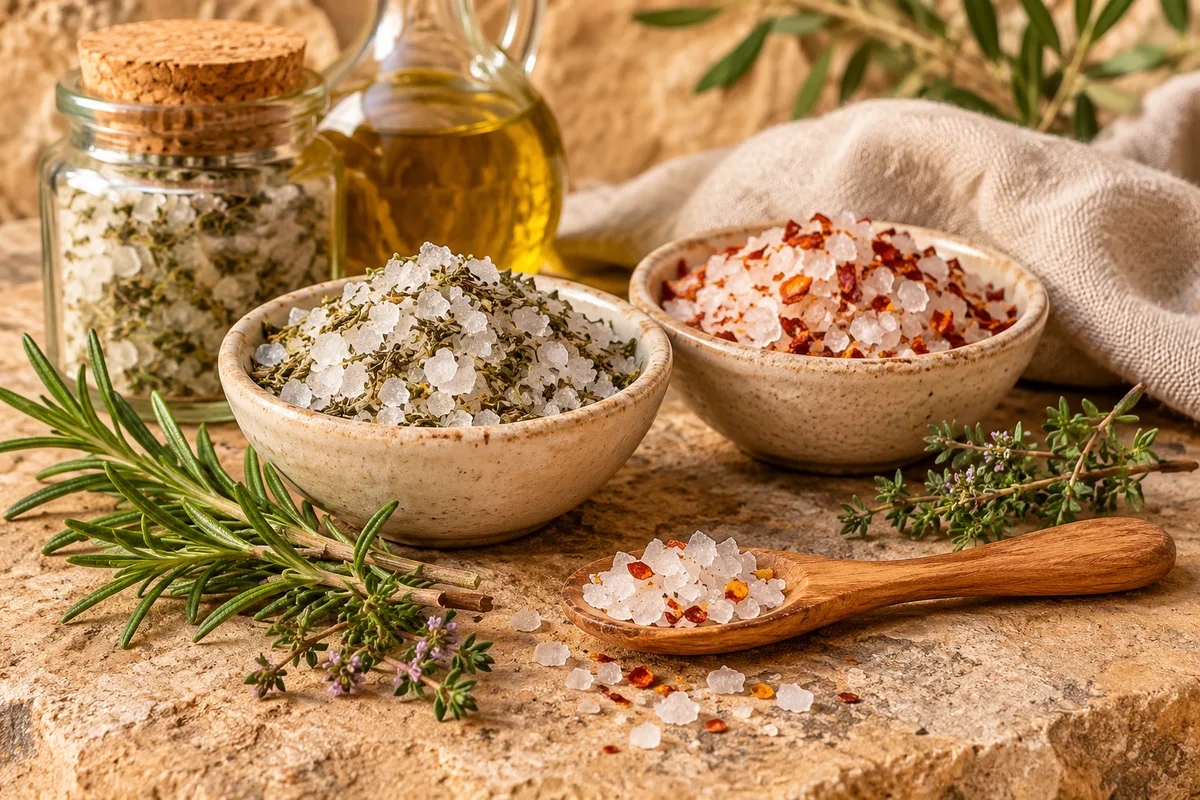
When we talk about Mallorcan sea salt, it is not just a question of marketing. There are real, noticeable differences between artisan Mallorcan sea salt and the refined supermarket salt we use every day. Here are the five most important ones, to help you decide whether the switch is worth it.
1. How it is obtained, and its purity
Refined salt goes through an industrial process of dissolving, chemical purification, recrystallisation and drying in high-temperature ovens. The result is almost pure sodium chloride (NaCl): over 99%. The process removes almost all the natural minerals.
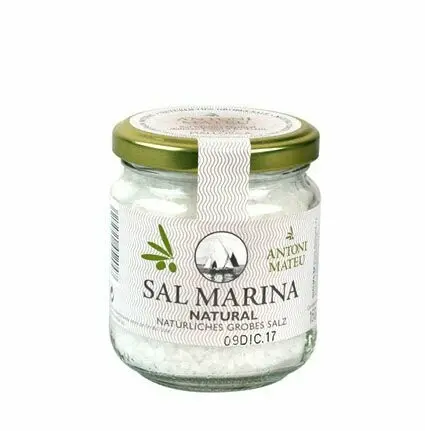
Artisan Mallorcan sea salt, such as the Antoni Mateu Natural Salt, is obtained by solar evaporation of seawater in salt pans, without chemical treatment. It keeps the trace minerals that occur naturally: calcium, magnesium, potassium and many other trace elements.
2. Flavour profile
Refined salt tastes of salt and nothing else. Artisan sea salt has a rounder, more complex profile: the saltiness on the plate is the same (you do not need to use more), but the finish is more mineral and deeper, and it lacks the metallic aftertaste that very refined table salt sometimes has.
3. Texture and use in the kitchen
Fine refined salt dissolves instantly. Medium or coarse sea salt dissolves a little more slowly, which makes it ideal for finishing: that last pinch over a steak fresh off the grill, over a carpaccio or over a slice of bread with tomato. The crunchy flakes on the plate add a tactile dimension that fine salt cannot give.
4. Varieties with added value
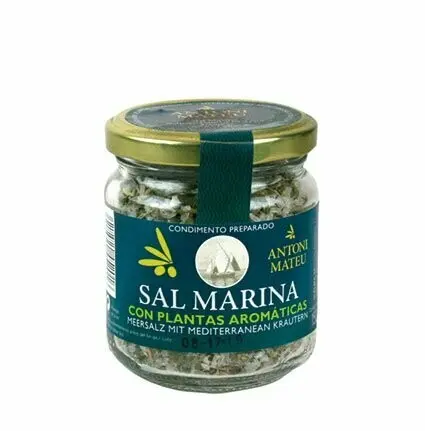
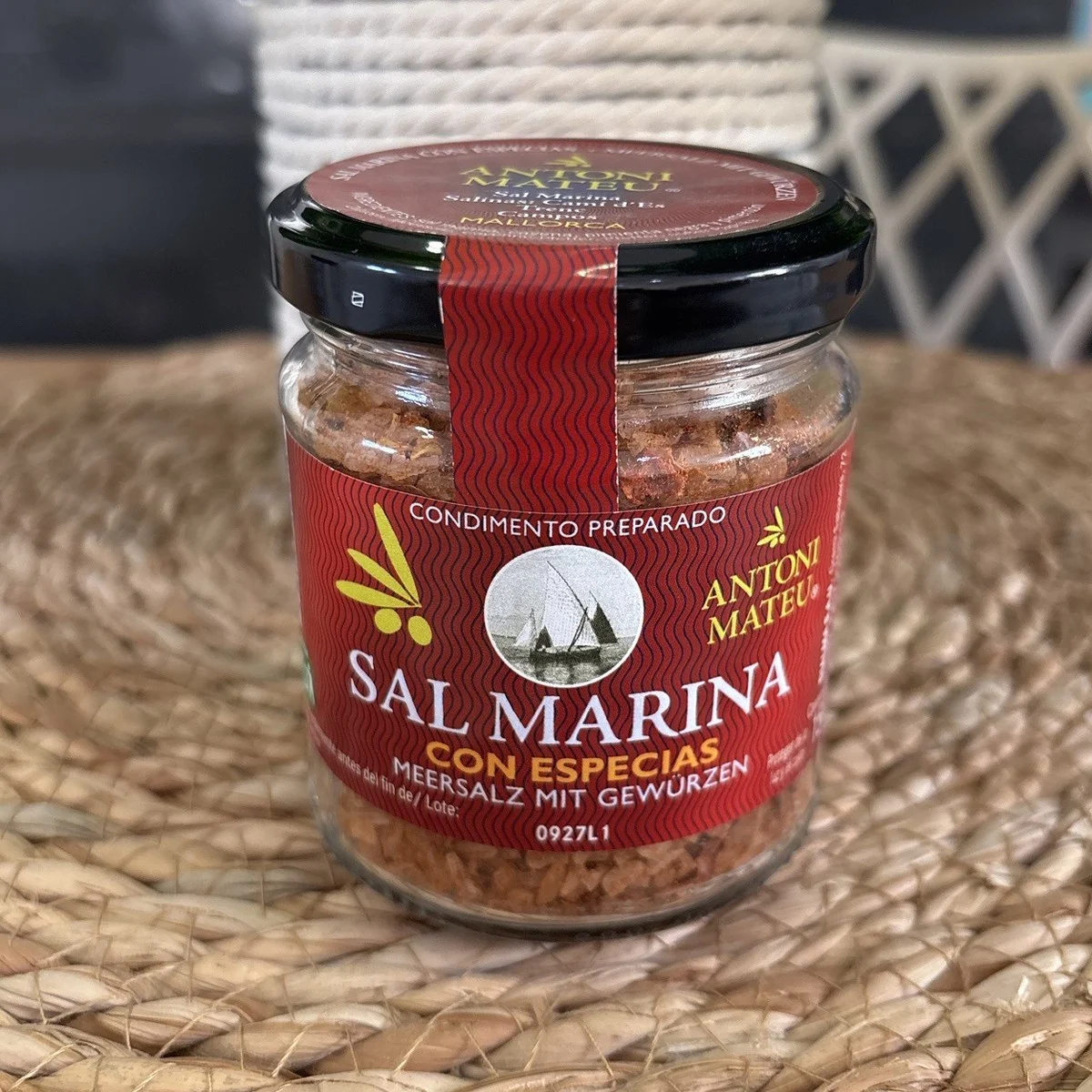
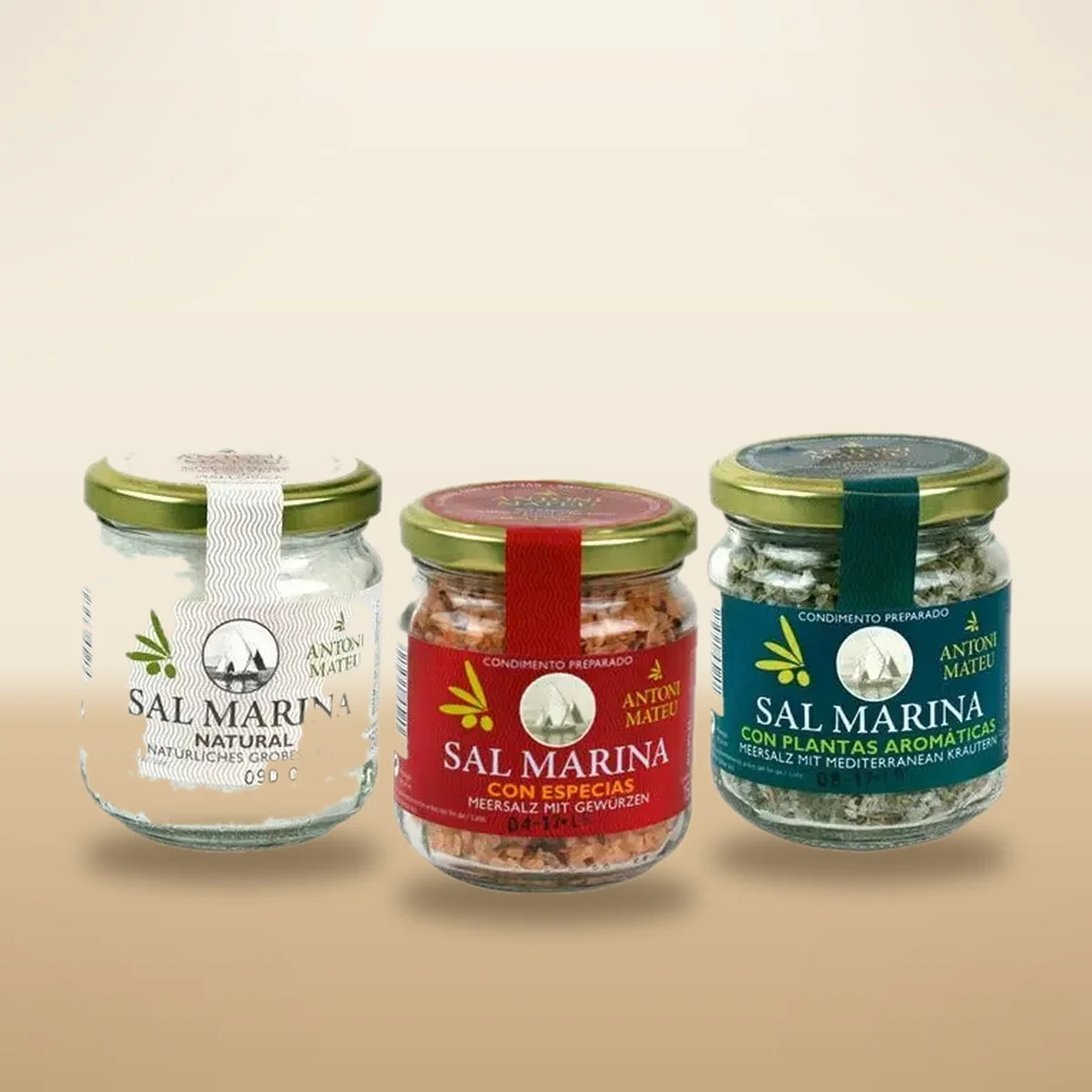
Refined salt is just refined salt. Artisan sea salt can be enriched with natural herbs and spices. The Antoni Mateu Salt with Aromatic Herbs and the Caimari Salt with Spices are good examples of how a basic ingredient can become a complete seasoning with its own character.
5. Sustainability and traceable origin
Supermarket refined salt usually comes from salt mines or industrial salt works located anywhere in the world. Mallorcan sea salt has a specific, traceable geographical origin, and its production avoids intensive thermal and industrial processes.
How much does the difference cost?
A kilo of supermarket refined salt costs between €0.30 and €0.80. A 150 g jar of artisan Mallorcan sea salt costs around €5. That sounds like a big gap, but if you mainly use it for finishing (where the quantity is small), a 150 g jar lasts for months. The difference per actual use is a few cents a day.
Bring Mallorca to your table
Products from Mallorca that go with this article, shipped across Spain and Europe.